Monday, 30 May 2011

Field Trip Part Three - The Journey Home


On arriving back at the camp the wind had picked up again but visability was OK and I got a bit lost in time just watching the ice crystals dancing across the surface of the snow. I have to say that one of the higlights of this trip is that I haven't had to cook a thing! I haven't even had to make myself a cup of tea. Mike has looked after me so well!
So that night Mike cooked up a great dinner and we settled in for the night with a bottle of wine. Mike had ensured that the wine was left hanging at the apex of the tent so that the heat from the stove would keep the wine from freezing. Attention to detail...I like it
Dinner was followed by a beautiful sunset.

Of course, with no cloud cover, the overnight temperature dropped to -20, and we woke to a thick layer of frost inside the tent. Everything inside was frozen solid and it took us ages to melt the water for our morning cuppa. Taking advantage of the good weather we re-visited Cavajal. This time we wandered along the coast, enjoying the wildlife, although not the smell.

The following day the weather turned nasty and after riding out on the Sidoos for an hour we had to turn back. The visability had dropped to 20 to 30 metres and there was almost no contrast. In a situation like that it is as if you cannot trust any of your senses particularly the one of direction! We returned to the camp and we were tent-bound for much of the next 48 hours.

Where did I put the Roof?
To allievate the boredom Mike set out to teach me how to build an igloo and we did pretty well before the weather forced us inside the tent again..


I read a book.... and then another book.....and then the Paros Life....desperate times.....

all of it....


from cover to cover.

The next morning we spent a fair amount of time digging ourselves out of the snow that had accumulated around the tent and digging the Skiddos out. A lot of snow had fallen!


Tent Peg Here Somewhere


Then it was a brilliant but uneventful five-hour ride home, where we had to unpack all the gear from the sledges, clean it all and stow it all away in it's place, ready for the next team to use. Mikes first priority was a hot meal. Mine...a long hot shower! My shoulders and back really ached from riding the Skidoo...they are very physical to ride and require a lot of input.

Despite my intial anxiety I really enjoyed this trip. Mike was a superb leader and great companion. Being exposed to the fury and the calm of Antarctica has made me appreciate the beauty of this continent even more.

Thanks Mike

Sunday, 22 May 2011

Field Trip Part 2 - Carvajal


Carvajal

Living/Accommodation Building
Built in 1961, Carvajal used to be a British base called Adelaide Island Station. It consists of five buildings - living/accomodation, genny shed, garage, trade workshops and an additional accomodation building. The reason that it came into existence is that the buildings were originally intended to be built at Rothera, thus establishing the base there, but for two seasons the ship couldn't get into the Rothera location due to bad weather, so the base was built at what is now known as Carvajal.

Spot the Pilot
The British occupied and operated the base until 1977 when the aircraft skiway deteriorated. Rothera had opened in 1975 and operations were gradually moved over. The base was transferred to Chile on the 14th Aug 1984 and renamed Teniente Luis Carvajal Villaroel Antarctic Base (Teniente Carvajal). Chile has allegedly used the station as a summer only facility since this time. In the last few years the skiway has deteriorated further, leading to the death of a Chilean air mechanic, when he fell down a crevasse. Since then the Chilean Air Force have ceased operations at Carvajal. The Chilean Navy continues to visit the base during the summer. Their visit should be to ensure the Base is in good order....it isn't. It is a complete mess and was I was taken aback at the amount of rubbish and machinery, including a crashed twin-otter plane, that has just been left here to rot. I suspect the annual visits by the Navy are more to keep a claim on the territory than anything else.

The Welcoming Committee


The base is overrun now with fur and elephant seals who we had to contend with to get to the Base. They are fond of biting anything they can get their teeth into and we had to approach the base with sticks, banging them against the rocks so to create the clanging sound that elephant seals hate. They are incredible beasts that despite their size move alarmingly quickly


It looks like the death of the Chilean air mechanic sparked a sudden and mass evacuation. The place is frozen in time with items abandoned in mid-use. Compared to the relative luxury of the facilities at Rothera the guys here must have really had a hard shift.
The Bar
Exercise Room
Kitchen

Games Room

Boot Room


The Chapel


Having left my mark on the whiteboard in the ex-boss's office and Mike having stamped my passport with the official Chilean seal it was time to head back to camp.

Marked for Posterity
This about as much climbing as I can manage with this lot on!

Thursday, 19 May 2011

Field Trip Part 1

The weather forecast
All the winterers on the BAS bases get two weeks 'holiday' a year. The first week is in the early winter and this was my opprtunity to spend a week away from the base becoming a true Antarctic explorer. Everyone has a choice as to what they want to do with their week but unfortunately choosing to have a lazy week in the base, watching dvds, eating Mars Bars and watching someone else do the washing up didn't appear to be of them. The choices that were available were climbing the local peaks and exploring the mysterious crevasses in the areas around the base or to go further afield and visit the Chilean base of Carvajal, at the southern-most tip of Adelaide Island. We were to live in a tent for the period and I was told not to bring any changes of clothing...what I had on when we left was what I would have on when we returned!

Practice Session


We were due to leave on the Monday morning and return on the following Sunday night but as Monday dawned the weather turned nasty with 40 knot winds and almost zero visability. So Mike and I skidooed to Vals where the half sledge was waiting and went for a practise linked drive with the sledge in the middle and me following along behind. It was really difficult to see and keep the rope taut without adding extra weight pulling onto Mike's skidoo. All the vehicles and sledges are linked together and we tie ourselves securely to the Skidoos for safety because the Antarctic terrain has many hidden crevasses. If one of the Skidoos goes down a crevasse the ropes provide safety lifelines. This was a theory I was hoping would not be tested.We were out for 3 hours but it felt like 10.
Tuesday morning we set off, the weather having improved a bit but not much. First challenge was getting the sled away up the slope which had turned into a wall of ice. We ended up traversing it at an angle. Once achieved we made our way to the first stop...a small caboose, where we sat and debated whether or not it was wise to continue as the weather had deteriorated further.
We decided to go for it and set off on a five-hour journey towards our base camp location.

The Stork Bowl
To get to the south of Adelaide Island from Rothera you first have to head north. We rode through Stork Bowl. Then it was a long arduous descent down through the notorious McCallum's Pass. Mike had warned me that we would need almost perfect visability to go through the Pass as it is a heavily crevassed route down to the Shambles Glacier. Fortnately by the time we got there the cloud had lifted sufficiently to wend our way through.

The Shambles glacier flows west to east across the middle of the island. We headed west along the Shambles, and then turned south onto the Fuchs Ice Piedmont on the other side of the Island. From there it's due south all the way to Carvajal. As with everywhere in Antarctica, it is a potentially dangerous route needing good visibility and contrast to ensure both parties cross safely.

The scenery around was amazing and I was beginning to enjoy myself!
 
But things can change very quickly in Antarctica.

The Myth
After about three hours the weather started to change; the wind picked up and the sky darkened. We pressed on for another hour through the rapidly deteriorating weather until we reached our base camp location, a place at the bottom of a mountain called The Myth.

We parked up the Skidoos and started to unload the camping gear from the sledge. At that point the weather got nasty and I got a bit scared. The wind suddenly picked up,snow was falling heavily and the temperature dropped. A blizzard was on the way.
Pitching the tent was so difficult in such extreme conditions, but Mike's experience proved to be a major factor in getting the tent erected. It was exhausting work, fighting against the angry Antarctic weather, but finally we managed to get the tent up and crawled inside for a very welcome cup of tea.

The following morning the wind had dropped off significantly and it had stopped snowing. We got the shovels out and started to dig out the Skidoos and all our other stuff that had been buried in the blizzard.

With the prospect of potentially good weather ahead of us, we set off on an the ride to Carvajal.

Of which.....more later

Sunday, 15 May 2011

Winter Is Coming

Sea starting to freeze over

The escapees!

Ready to depart

The summer has officially ended. The twin otter planes have left as has the Shackleton...full to busting with both summer staff and ex-winterers who are on their way to the Falkland Islands before flying home to the UK. It was a very strange feeling watching the ship depart. I felt a little bit jealous of those returning home but also excited about facing my first winter in Antarctica and looking forward to working with the small team of us left here.

The 20 of us who are remaining  stayed on the quay until the ship became out of sight and then returned to the base where we searched for the various booby traps that tradition dictates the summerers must leave us! Fortunately my kitchen was a booby trap free zone.
See you in 7 months!
So down to 20 folk from 120 folk, Makes a big difference in the kitchen I can tell you! And I now get two days a week off work which means the rest of them have to take turns in dishing up. I am not sure whether to be delighted or appalled at this. Time will tell I guess.

The first night of being the Wintering Team was spent in the bar...best place for a bonding session!


Rothera Winter Team 2011
 The first highlight for me in this new set-up was the treat of going on a Winter Trip. I use the words 'highlight' and 'treat' wih caution here as the thought of being on the Antarctic tundra in a tent, with no change of clothes, at minus 20 with no sign of a beer anywhere for 7 days did not instantly appeal. However, everyone else was getting worryingly excited about it.


Getting roped up

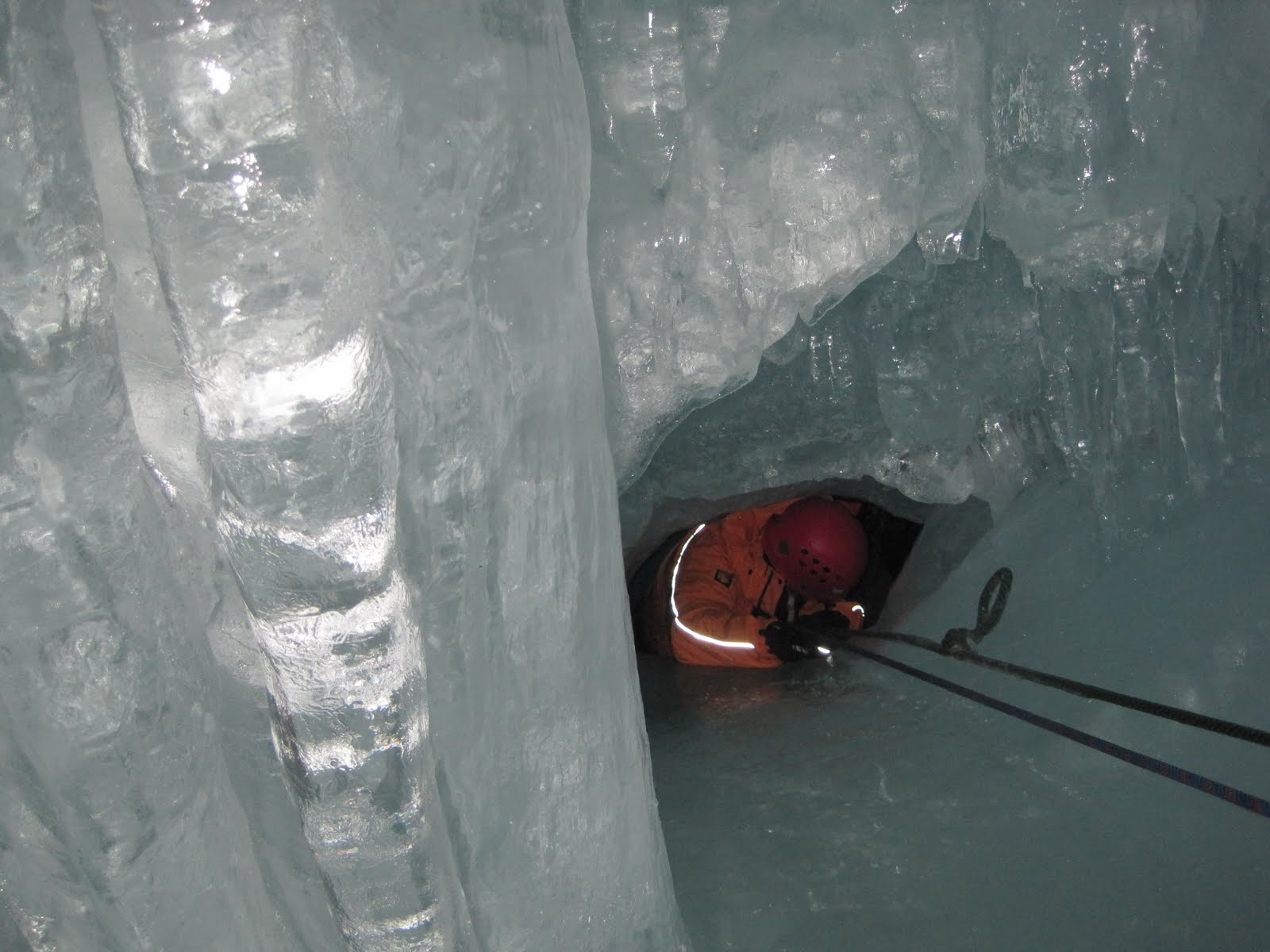
I was to be paired up with Mike, one of the Field Assistants. These guys know everthing there is to know about travelling in snow and ice and can sniff out a cravasse at 50 metres...well that's the story...and I hoped it was true! Before we left I had to do a couple of days training. This involved learning how to drive a skidoo that was roped up to another one. The trick here is to keep the rope tight but no so tight as to impede the leading vehicle. Sounds easy doesn't it.....let me assure you it's not. I also learned about the importance of travelling in pairs when walking on a glacier, harnessing up, learning how to tie several different knots into one length of rope and then prussiking up a rope (climbing up and down a rope with minimal effort - I am not sure whose 'minimal effort' was being referred to here...I suspect Sir Chris Bonington's). The other bit of the training was to actually go down a cravasse...which seemed completely unnecessary to me but them were the rules!

Goodbye Cruel World

Oh What Fun!
Are We There Yet?

How Do I get Out of Here?


But it was more than worth all the effort and intial anxiety. Standing in a cathedral of glass and unusual choral music as the ice broke, dripped and shifted around me.

Magical!


In the next few days I will upload my picture from my first field trip and meanwhile will get used to more of the weather pictured below.

You think I'm walking to the kitchen in this weather!

Thursday, 17 March 2011

Journey to the Falklands Part 2


Continuing from the last post.....

Bunk on the James Clark Ross
One's own napkin!
After passing through the channels we had a couple more calm days before we would hit the Drake's Passage. Life on the boat was very civilised and we were well looked after by the crew. How great it was to be cooked for by someone else even if it was sometimes a bit of a struggle to eat.

On the way to the Falklands the boat undertook several scientific experiments. This mainly involved working with the 'CTDs' (an oceanagraphic instrument which measures Conductivity (used to assess the saltiness / salinity of the water), Temperature and Depth in conjunction with automated sample bottles which enabled water samples to be taken at various depths .The CTD and water bottles were lowered to depths of up to 4000m in the Drake Passage! As the crane lowered it made the boat tip at a very alarming angle!

Elephant Island
In the background of the photo above you can just make out Elephant Island. The island is most famous as the desolate refuge of Ernest Shackleton and his crew in 1916. Following the loss of their ship Endurance in Weddell Sea ice, the 28 exhausted men reached Elephant Island after an ordeal on drifting ice floes.

Realising that there was no chance of rescue by any passing ships, Shackleton decided to set out for South Georgia where he knew there was a whaling station. In one of the most incredible feats in the history of sailing and navigation, Shackleton sailed off with five other men on an 800-mile (1,287 km) voyage in an open lifeboat arriving at South Georgia almost two weeks later. His second in command, John Robert Francis “Frank” Wild remained in charge of the 21 other men on Elephant Island for more than four months while Shackleton led attempts to return with a rescue ship.
According to Frank Worsley, Shackleton's captain, the men pronounced the island with a silent 't' and an 'h' prefixed, which makes it into Hell-of-an-Island.
 
Tha amazing story of Shackleton and his crew did make my acute sea-sickness and raging toothache kind of pale into insignificance but I was very glad when the Falkland Islands came into view and I could stand on solid ground again!

Tuesday, 1 March 2011

Back Again!


I'm the good-looking one in the back of the boat
Hello Everyone! Just when you thought it was safe to go onto the internet, I pop up again. Sorry it has been so long. Times have been busy and with the Base now winding down at the start of winter I now have more time to update you on all my comings and goings over the past 3 months!

Oh ....and before I forget to say. Please remember that all the photos on the blog are 'clickable' - i.e. if you want to see the picture full size just double click on them and then click the 'back' button to get back to the blog. So....now we've got all the technical stuff out of the way.....


Ambulance for Lorna Lomax
 In December I had to be medically evacuated to the Falkland Islands. Did you hear that? MEDICALLY EVACUATED. It's got a lovely ring to it don't you think?! To be honest there really wasn't any emergency. I managed to crack a tooth and despite being bent into various positions under the base's X-Ray machine the Doctors here couldn't really do anything for me. Pictures of my tooth were beamed by satellite to dentists in Cambridge who recommended that I should be sent to the hospital on the Falkland Islands for treatment. Unfortunately the Dash plane was out of service so it meant a 6 day journey on the James Clark Ross and a delay on the Falklands until the plane could be repaired.

Leaving Rothera
I wasn't really looking forward to the trip. As you might remember it would mean crossing the infamous Drake's Passage.  Here's a bit of info for you.....The Drake Passage is the stretch of water between the most southerly tip of South America and the most northerly tip of the Antarctic peninsula. It is the place where not only are there high and strong winds that blow most of the time, but where the "Circumpolar Current" is squeezed through its narrowest gap. This is a Westerly flowing current that flows around Antarctica powered by Antarctic winds. It flows at the rate of around 140 million cubic metres (tonnes) of water per second, or the equivalent of 5000 Amazon rivers.

The Drakes passage has been described as the roughest stretch of water in the world. To reach the Falklands from the Antarctic peninsula it is necessary to traverse this stretch of water at right angles to the current flow. The result is often very lumpy seas, corkscrewing boats and a very sick Rothera chef!

Off to the Falklands
I was also concerned about leaving my chef team behind. The base was getting busier by the day and I was worried about the amount of work that would entail for Issy and Alan. But the Base Commander enlisted other people to do the prep and I was assured that everything would be OK.
 
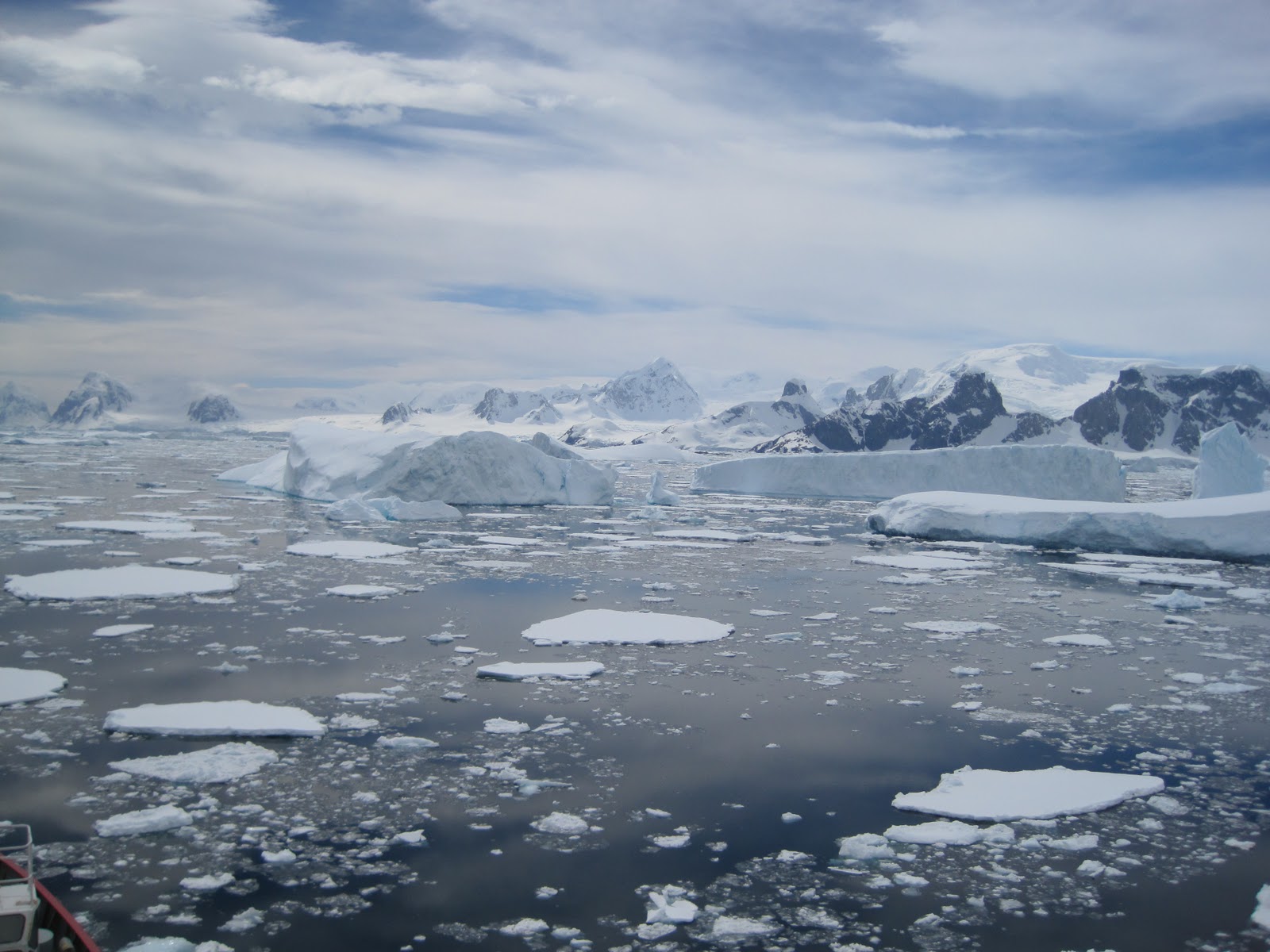
The first part of the journey to The Falklands took us through the stunning Numayer and Lamaire Channels. These really were awesome beyond words so I'll just stick in some of my better photos instead!


Nicknamed "Kodak Gap" by some, you can see why it is one of the top tourist destinations in Antarctica and why it kept my mind of my toothache for a few hours!
 
TO BE CONTINUED